


Amber Observe is a monthly commentary on crypto markets, focusing on key trends and events that influenced the industry the past month.
In this month’s Observe, we discuss major exploits, the rise and fall of DogeChain, and the latest developments in the NFT scene. In addition, we feature Mercury - an NFT solutions provider, Manifold Finance - a multi-protocol middleware solution, and GMX, a decentralised perpetuals exchange.
Market Recap
Prices of BTC and ETH rallied over the first week of August post-FOMC, reaching highs of around $24,600 and $1,800 respectively. This upwards trend continued through the second week, forming monthly highs for both assets. BTC reached levels of $25,200, the highest since the market’s crash in June while ETH on the other hand, made a larger jump towards $2,000, matching price levels pre-June crash. This seemingly bullish movement would be short-lived, as prices of both assets nosedived to close out the month, likely following the hawkish message by officials at the Jackson Hole symposium. BTC dipped to recent support levels of $19,600, around 22% down from its monthly high and in similar fashion, ETH experienced a 27% decline to $1,450.
August featured multiple exploits, with that of Nomad and Solana wallet private keys being the most significant ones. The Nomad bridge was drained of $156 million due to a smart contract vulnerability allowing users to pass in arbitrary amounts while withdrawing from the bridge, not correlating with the amount deposited. An estimated total of over 9,200 hot wallets were affected in the Solana exploit, with a total of around $6 million in various tokens being stolen from users. Aside from these incidents, this month’s large headlines also included the sanctioning of Tornado Cash, allegations against Ava Labs, and the quick rise and fall of DogeChain. DC – DogeChain’s token, was announced along with news of airdrop opportunities for users who interacted with the protocol, causing massive price movements of tokens within the ecosystem, with DOGE making a 25% rise. After its official airdrop and launch on the 24th, DC witnessed an even greater surge of almost 480% over the next few days, before dipping more than 30% once news of a DogeChain developer wallet dumping large amounts of the token began circulating.
In the NFT space, SudoSwap was the hottest topic this month. Being the first ever AMM for NFTs and allowing users to set up their own or trade with existing AMM pools, it successfully managed to eliminate the need for a middleman in the NFT market, amassing over 20,000 unique users, 26,000 pools, and a total trading volume of almost 18,000 ETH, gaining a significant market share amongst NFT marketplaces. Another notable topic was surrounding liquidations on BendDAO, a P2Pool NFT liquidity protocol. The number of defaults on loans, combined with the protocol running low on resources has resulted in lenders being unable to withdraw their funds. Currently, the DAO is still in the process of deciding their future course of actions.
Going into September, one can be excited for the Merge to finally happen on the 15th. With a hard fork of Ethereum Proof-of-Work during the Merge being a commonly discussed proposition by the existing community and miners, it will be interesting to see how this pans out and what possible opportunities it may bring. Aptos and Sui are also ones to keep an eye on as they remain in close competition, with Aptos’ 3rd incentivised testnet being launched and Sui opening up validator registration for its own.
Key Events
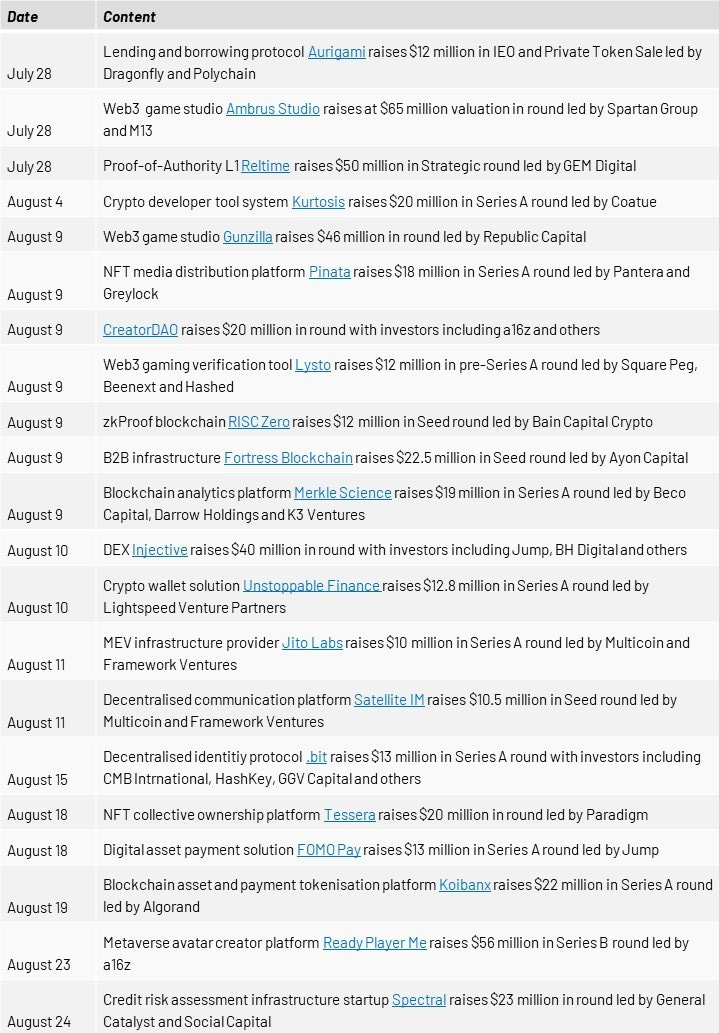
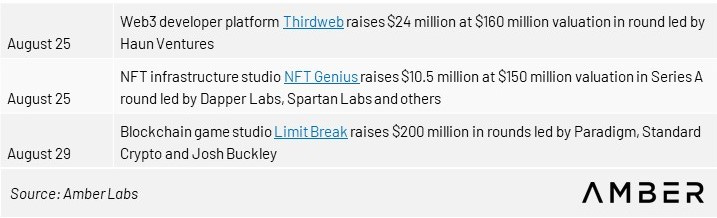
On-chain Opportunities
Overview

Mercury
Mercury is a provider of white-label NFT platform solutions for major brands and enterprises, building bespoke products such as collections, marketplaces, and outreach campaigns. Currently partnered with brands within in the NCAA, the American college sports association, Mercury has already helped colleges such as Kentucky and Kansas release their own NFT collections, released and retailed on their individual marketplaces. Fans can expect new partnering brands and their respective collections to be unveiled in the coming future.
Manifold Finance
Manifold enables and provides access to high-value transaction pools on EVM-compatible chains through its SecureRPC infrastructure, aggregating multiple endpoints such as Flashbots and Eden Network, along with maintaining direct access to disparate mining pools and validator nodes.
Manifold has also built OpenMEV on top of SecureRPC, providing a credible neutral platform and enabling protocols and applications to recapture MEV profits. It does so by creating a private mempool to run transactions and bundle trades together through. This allows users’ transactions to be shielded from MEV-related attacks and lowers gas costs, after which protocols are returned any MEV profits and users given refunds and rebates for MEV and wasted gas. Currently, OpenMEV has already been integrated with SushiSwap, allowing traders on the protocol to benefit from a set compensation rate.
GMX
GMX is a decentralised perpetuals exchange that allows traders to trade various assets up to 30x leverage. With 0% slippage and a flat 10bps fee, it boasts one of the most competitive executions on trades, even comparable to that of centralised exchanges, resulting in its generation of over $56 billion in trading volume to date.
Aside from being able to utilise GMX as a trading platform on Arbitrum and Avalanche, users are also able to earn a portion of the protocol’s fees, which are currently ranked only behind Ethereum, Uniswap and BSC. This can be done through provision of liquidity and minting of their liquidity token GLP or the staking of the GMX token. GMX’s strong value accrual and non-inflationary tokenomics model has made it an increasingly popular topic over the past months.
Disclaimer
The information contained in this post (the “Information”) has been prepared solely for informational purposes, is in summary form, and does not purport to be complete. The Information is not, and is not intended to be, an offer to sell, or a solicitation of an offer to purchase, any securities. The Information does not provide and should not be treated as giving investment advice. The Information does not take into account specific investment objectives, financial situation or the particular needs of any prospective investor. No representation or warranty is made, expressed or implied, with respect to the fairness, correctness, accuracy, reasonableness or completeness of the Information. We do not undertake to update the Information. It should not be regarded by prospective investors as a substitute for the exercise of their own judgment or research. Prospective investors should consult with their own legal, regulatory, tax, business, investment, financial and accounting advisers to the extent that they deem it necessary, and make any investment decisions based upon their own judgment and advice from such advisers as they deem necessary and not upon any view expressed herein.